Something I learned as a CIO that has made a lasting difference, and that I encourage every technology leader I work with to pursue that I call cross-functional brilliance.
Let me explain what it means, why it matters, and some practical ways to build it. The specific approach will vary by company size and structure, but the underlying principle applies whether you're leading IT at a privately held mid-market company, a large corporation, or a public entity.
Why Cross-Functional Brilliance Matters
Developing deep knowledge outside your own function might sound idealistic or like a distraction from the technical expertise that got you where you are. But consider the alternative: being pigeon-holed as the person who only understands technology in an organization that runs on much more than technology.
As a CIO or CTO, you will be more effective in direct proportion to how well you understand each part of the business you serve. Everyone already expects you to know technology. What will surprise them, and earn their genuine respect, is when you understand what matters in their function.
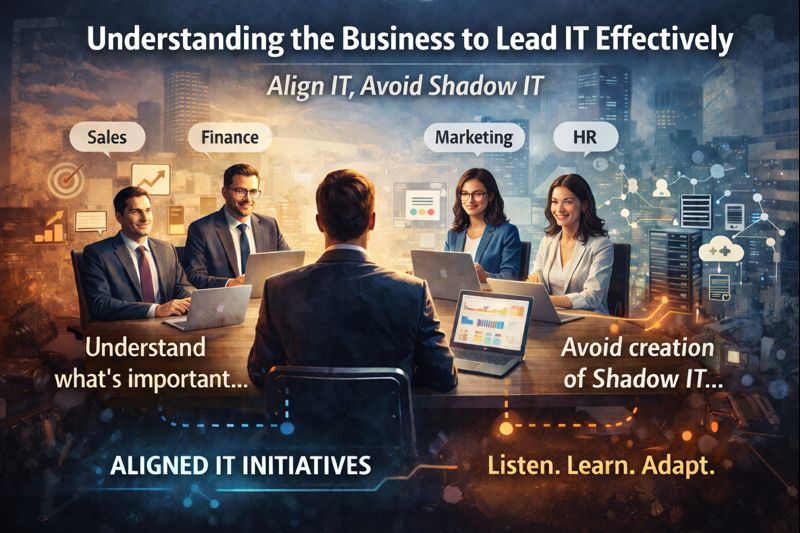
The more you learn about functional leaders and their priorities, the better you'll be at making sense of what they're actually asking for when they come to you. You'll catch the real requirement underneath the stated request. You'll anticipate concerns before they become objections. And as a significant added benefit, you'll reduce the shadow IT that tends to proliferate when functional teams don't trust that IT truly understands their needs.
There's a language dimension to this too. Every function has its own vocabulary. Finance speaks differently than sales, operations differently than marketing, etc. When you can meet each function in their own language, rather than asking them to translate their problems into IT terms, the quality of every conversation improves.
How to Build It
Here are the approaches I found most effective over the course of my career:
Get to know each functional leader, professionally and personally. Ask them to lunch. Grab a drink after work. When you're considering a technology change that will affect their area, ask for their advice before you've made up your mind. Listen and learn rather than selling your ideas. The goal of these early conversations is understanding, not alignment.
Bring functional leaders into IT strategy development. Early. Solicit their participation while you're still forming the strategy, and again before you move from strategy to execution. Ask them to walk you through their biggest challenges in reaching their goals, particularly the ones that touch technology. Listen and learn rather than defending your existing thinking.
Ask to sit in. When it seems appropriate, ask if you can attend one of their staff meetings, or join them for a meeting with a customer, supplier, or key business associate. Explain that observing will help you understand their needs and challenges so you can serve them better. Then actually do that. These are opportunities to listen, not to insert yourself into the discussion. Remind yourself to be patience and to restrain from trying to take over the conversation. Remember - The more I listen the more I learn. The more I learn the more I listen.
Get to know the key people inside each functional organization. Not just the leaders, but also the high performers a level or two down. Understand why they stand out and how they work. Are they effectively using the IT systems you've implemented, or have they found workarounds that let them excel while avoiding what they see as clunky or bureaucratic tools? Their answers will tell you more about where things are and aren't working than almost any other source. And you may discover you've found a new channel for understanding real business requirements before they become formal IT requests.
The Upside Is All Upside
I have found that knowing the business I support as deeply as I know the technology made me more effective and more appreciated in every role. I honestly see no downside to investing the time and working on this deliberately.
You won't lose track of the new technology that excites you. You won't become less of a technology leader by becoming more of a business leader. What you'll gain is the ability to share that excitement more effectively and translated into terms that resonate with the people who need to believe in it.
Listen. Learn. Adapt. That's not a soft skill. That's the job.